
Free Patient Care Technician Training in Connecticut: Start Your Healthcare Career with $0 Tuition
Breaking into healthcare doesn’t require years of education or crushing student debt. Free patient care technician training is available throughout Connecticut for the right person, allowing individuals to find programs suited to their goals and launch a healthcare career in as little as 8 weeks. This guide is for Connecticut residents interested in starting a healthcare career quickly and affordably. With high demand for healthcare workers and rising education costs, free patient care technician training offers a practical path to stable, rewarding employment.
Fast Answer: How to Get Free Patient Care Technician Training in CT
Free and low-cost patient care technician training is possible in Connecticut through government grants, WIOA funding, and employer partnerships. WIOA-approved programs allow eligible individuals to receive federal funding to cover tuition for PCT training.
- Students at Northeast Medical Institute may qualify for free technician training through Workforce Innovation and Opportunity Act funding, state grants, or third-party payers
- CT Department of Labor American Job Centers in Bridgeport, Stamford, New Haven, and Hartford can sponsor tuition for approved healthcare training programs
- Free training for patient care technicians is primarily available through employer-sponsored programs, state-funded grants, and non-profit organizations
- “Free” typically means tuition is covered while students remain responsible for books, uniforms, exam fees, and background checks
- Northeast Medical Institute is a Connecticut-approved provider of PCT, CNA, Phlebotomy, and EKG courses that often qualify for no-cost training programs
What Is a Patient Care Technician?
Patient Care Technicians (PCTs) provide hands-on patient care in hospitals, working alongside nurses to ensure patient comfort and recovery. PCTs monitor vital signs, assist with patient mobility, perform EKGs, collect specimens, document patient data, and provide emergency response and comfort care. They work under the supervision of registered nurses and are essential members of the patient care team, often performing tasks that go beyond basic Certified Nursing Assistant (CNA) duties.
A patient care technician is a cross-trained care technician who combines CNA, phlebotomy, and EKG skills to provide direct patient care under the supervision of a registered nurse. PCTs work alongside nurses in hospitals to ensure patient comfort and recovery.
Common work settings in Connecticut:
- Hospitals and acute care facilities
- Long term care facilities and nursing homes
- Rehabilitation centers and dialysis centers
- Home health agencies
Core responsibilities:
- Monitor vital signs and assist patients with daily living activities
- Perform EKGs and collect specimens for laboratory testing
- Document patient data and provide emotional support
- Assist with patient mobility, bathing, and patient hygiene
- Deliver emergency response and comfort care
PCTs are essential members of the patient care team, often performing tasks beyond basic CNA duties. This experience strengthens applications for nursing school and registered nurse programs.
How Free Patient Care Technician Training Works
Free patient care training typically involves grant-funded tuition or government programs rather than a completely cost-free experience. The Workforce Innovation and Opportunity Act is a federal program that provides funding for job training to unemployed or underemployed individuals.
Common Connecticut funding sources:
- WIOA (Workforce Innovation and Opportunity Act)
- SNAP Employment & Training
- Vocational rehabilitation services
- Local workforce board scholarships
Programs are often funded by government grants or community initiatives to help residents find stable careers. Many PCT training programs offer free or low-cost tuition options for eligible individuals, particularly those who are unemployed or receive public assistance.
Students apply through their local American Job Center with ID, proof of residence, income documentation, and a resume. Northeast Medical Institute is commonly approved for PCT, CNA, and related programs in Connecticut.
Northeast Medical Institute’s Patient Care Technician Program
Northeast Medical Institute is a Connecticut-based vocational school offering a short-term patient care technician training program designed for fast entry into direct patient care roles. The program features flexible scheduling with daytime and evening options in a hybrid format.
Program components:
- CNA training and phlebotomy certification
- EKG technician training and CPR/basic life support certification
- Infection control and patient safety protocols
- Medical terminology and documentation
Programs often require a high school diploma or GED and age 18 or older. Northeast Medical Institute prepares students for national certification exams and Connecticut state CNA licensing requirements.
After completing the online training portion, students must successfully complete a 100-hour clinical externship to gain hands-on experience before certification. The program works with WIOA and other workforce grants that can make PCT training tuition-free for eligible students.
Curriculum Overview: From CNA Basics to Advanced Clinical Skills
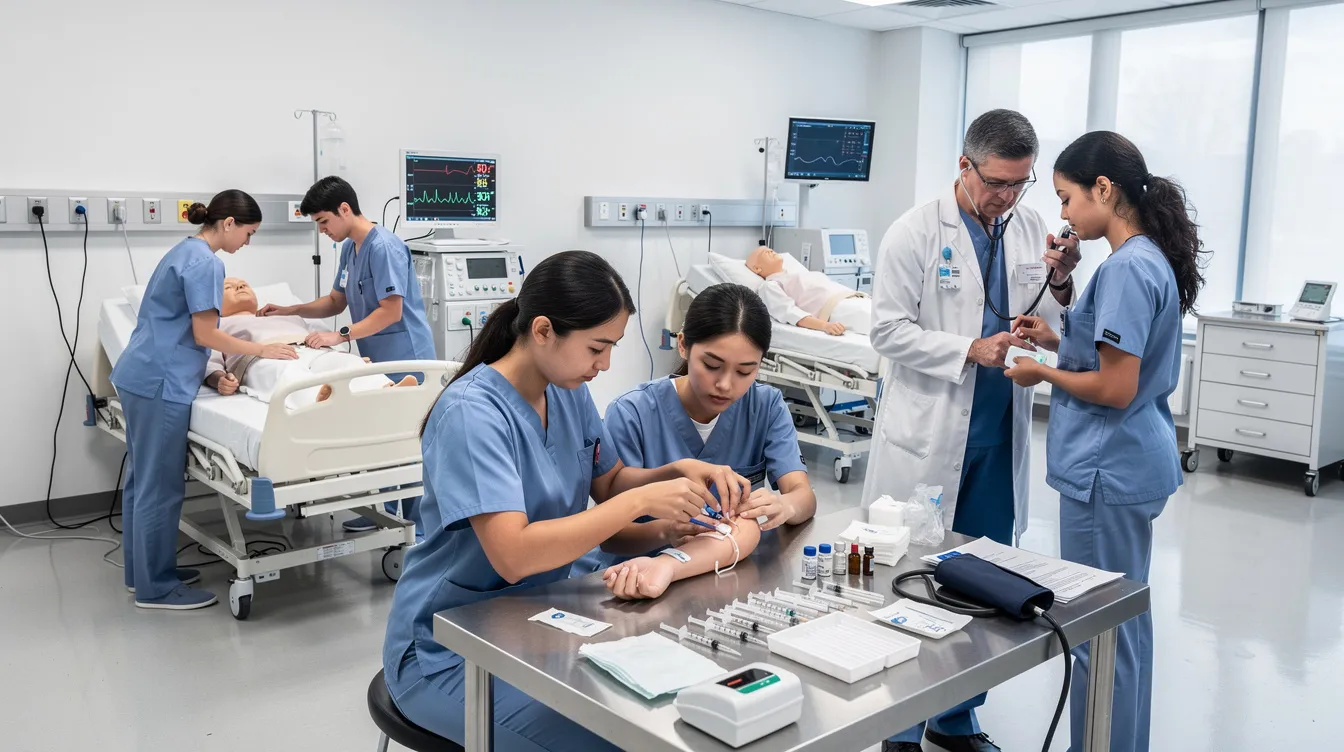
The curriculum moves from foundational patient care skills to advanced clinical procedures over several weeks. PCT training programs can typically be completed in as little as 8 weeks, allowing for a fast track into the healthcare field.
Weeks 1-2: CNA Fundamentals
- Activities of daily living and safe transfers
- Working under a registered nurse’s supervision
- Communication with patients and families
Weeks 3-4: Phlebotomy Training
Students move into focused phlebotomy coursework as part of Northeast Medical Institute’s broader healthcare training programs.
- Venipuncture techniques and capillary sticks
- Specimen handling and order of draw
- Lab safety and drug screening protocols
Weeks 5-6: EKG and Patient Monitoring
- Lead placement and 12-lead EKG acquisition
- Basic rhythm recognition
- Reporting to healthcare team members
Weeks 7-8: Integrated Skills
- Vital signs and patient monitoring
- Quality care documentation
- Clinical externship in hospital settings or long term care facilities
Who Qualifies for No-Cost or Low-Cost PCT Training?
Eligibility for free patient care technician training depends on funding program rules, but many Connecticut residents qualify without realizing it.
Common eligibility profiles:
- Unemployed adults and individuals laid off from other industries
- Low-income workers and recent high school diploma holders
- Career changers seeking entry level healthcare positions
- Veterans, single parents, and public assistance recipients
Income thresholds, Connecticut residency, and right-to-work status factor into eligibility decisions. Many large healthcare systems offer tuition-free training in exchange for a work commitment, and prospective students can also explore free CNA training options in Connecticut as an entry point into patient care roles.
Northeast Medical Institute’s admissions team can help connect students to local American Job Centers and guide them through no-cost training application steps.
How to Apply: Step-by-Step Guide to Starting Your Free PCT Program
Starting a free PCT program involves two parallel steps: admission to the school and approval from a funding source.
- Step 1: Contact Northeast Medical Institute via phone or online form to discuss the patient care technician training program, schedules, and campus locations
- Step 2: Attend an information session where staff review program expectations, clinical requirements, and WIOA options
- Step 3: Visit a Connecticut American Job Center with ID, Social Security card, proof of address, pay stubs or unemployment letter, and resume to request funding
- Step 4: Complete school enrollment paperwork, health requirements, and background checks once funding is approved
Many programs are designed in a self-paced online format, enabling students to finish faster or take longer based on individual needs, with Hartford-based CNA and phlebotomy courses offering especially flexible schedules.
Career Outcomes and Growth After Patient Care Technician Training
A PCT program offers quick entry into the healthcare field with strong job opportunities across Connecticut. Hospitals and nursing homes frequently provide free training programs that may include stipends during training.
Salary expectations: For more detailed pay ranges, you can review typical patient care technician hourly wages in Connecticut.
- Entry-level: Mid-$30,000s to low-$40,000s annually
- Connecticut PCTs earn $41,000+ across 27 hospitals
- Night and weekend shift differentials increase pay 10-15%
Common entry-level job titles:
- Patient care technician and certified nursing assistant
- Dialysis PCT and rehabilitation aide
- Mental health tech and monitor tech
Career ladder progression:
- PCT → LPN → Registered Nurse → BSN
- Full time employment while pursuing education
- Career coaching and job placement assistance available
Hands-on experience in direct patient care makes students stronger candidates for competitive nursing and university programs, and step-by-step guides to certifications for roles like CNA, phlebotomy, and PCT can help plan those next moves.
Frequently Asked Questions About Free Patient Care Technician Training
Do I need prior healthcare experience? No—many students start with no background. The CNA components cover foundational skills, and many facilities offer free training programs with on-the-job training for participants.
What’s the difference between a CNA and PCT? A patient care technician adds phlebotomy and EKG skills on top of CNA-level patient care, making them qualified for more advanced hospital positions; detailed FAQs about becoming a CNA in Connecticut explain how these roles compare.
Is the training really free? Tuition can be covered through WIOA or grants. Students should expect to pay for scrubs, background checks, CPR cards, and exam fees (approximately $375-$625 total).
How long is the program? Patient care technician training programs typically last around 8 weeks, allowing for part time study of 15-20 hours per week. Students have access to free training materials and practice exams, and some skills like EKG can be learned through an accelerated 3-day EKG technician course.
Does the school help with job placement? While no school can guarantee employment, Northeast Medical Institute provides resume help, interview preparation, live instruction, and local employer connections through partnership with Connecticut facilities.
Start Your Free Patient Care Technician Training Journey in Connecticut
Connecticut residents seeking a healthcare career have a clear path forward. In addition to PCT paths, future CNAs can review top CNA classes in Connecticut to compare options. Contact Northeast Medical Institute today to check your eligibility for WIOA or other grant-funded PCT training.
- $0 tuition for qualified students through workforce programs
- Complete your certification in weeks, not years
- Gain hands-on skills preparing students for hospital and long term care positions
- Clear pathways toward becoming a licensed practical nurse or registered nurse
Schedule a campus visit or virtual info session to see labs, meet instructors, and understand how the program works day-to-day. Starting a healthcare career as a patient care technician is often the first step toward making a real difference in patient nutrition, safety, and mobility—while building your own financial stability.