Patient Care Technician Training in CT: CNA + Phlebotomy + EKG in One Program

PCT Training in CT: Program Overview
National certification exam
- Part 1: Complete Hybrid CNA and earn your Connecticut CNA (Certified Nurse Aide) certification.
- Part 2: Complete Hybrid Phlebotomy and sit for the NHA Certified Phlebotomy Technician (CPT) exam.
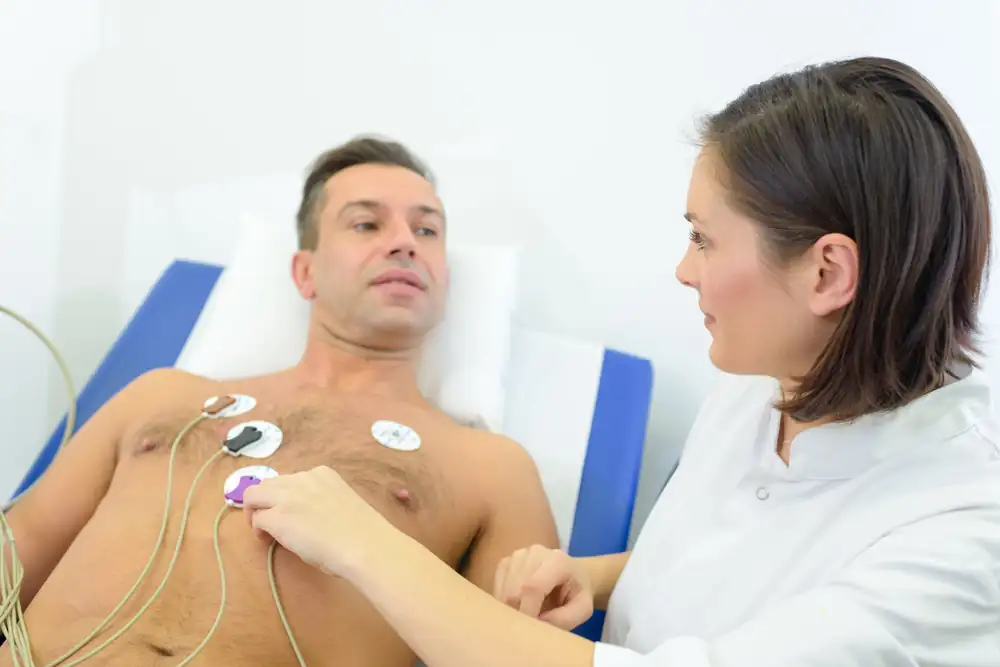
- Part 3: Complete Hybrid EKG and take the National Healthcareer Association CPCT/A exam.
Hybrid Patient Care Technician
- Hybrid CNA: 104 hours
- Hybrid Phlebotomy: 80 hours
- Hybrid EKG: 24 hours
- Day or evening classes
Upcoming Patient Care Technician (PCT) Class Dates & Registration
How Hybrid Patient Care Technician Training Works
Enroll and submit your documents
Part 1: Hybrid CNA
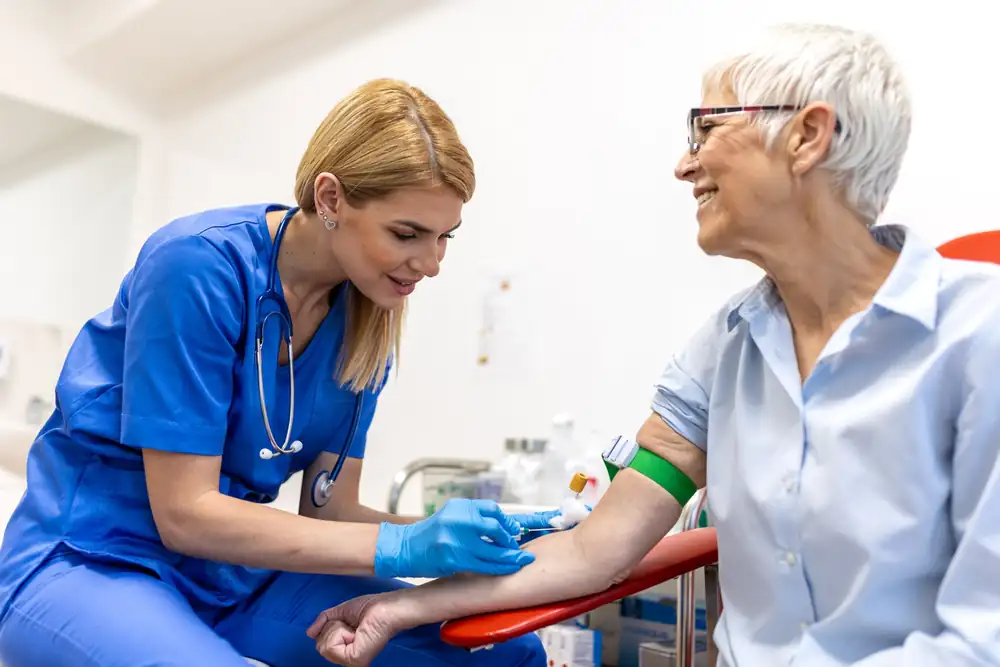
Part 2: Hybrid Phlebotomy
Part 3: Hybrid EKG
Take the NHA CPCT/A
What You'll Learn in Our Patient Care Technician Course
Part 1: Hybrid CNA
- Vital signs, height and weight
- Bathing, grooming, oral care and dressing
- Transfers, positioning, range of motion and gait belt walking
- Feeding, intake and output, catheter care
- Infection control, PPE and isolation
- Dementia care, residents' rights and communication
Part 2: Hybrid Phlebotomy
- Anatomy and physiology of the circulatory system
- Collection equipment, tube additives and order of draw
- Venipuncture, butterfly draws and capillary sticks
- Special collections, blood cultures and point-of-care tests
- Specimen handling, labeling and processing
- Safety, legal issues and quality control
Part 3: Hybrid EKG
- Heart anatomy, blood flow and the conduction system
- 12-lead placement, skin prep and patient positioning
- Reading a rhythm strip: waves, intervals and heart rate
- Recognizing common arrhythmias and artifact
- Holter monitors, telemetry and stress tests
- Running, printing and uploading an EKG
PCT Program Schedule
| Part | Course | Day schedule |
|---|---|---|
| 1 | CNA Hybrid CNA | About 3 weeks + 2 days · 8:00 AM–4:30 PM · online theory, 5 lab days, 2 clinical days |
| 2 | Phlebotomy Hybrid Phlebotomy | 2 weeks · 8:00 AM–4:30 PM · Zoom classes + lab days |
| 3 | EKG Hybrid EKG | 3 days · 8:00 AM–5:00 PM · Wed–Fri or Mon–Wed · 2 Zoom days + 1 lab day |
| Total | Day PCT program | About 10 weeks · 208 clock hours |
| Part | Course | Evening schedule |
|---|---|---|
| 1 | CNA Hybrid CNA | About 4 weeks + 1 day · 5:00–9:30 PM · online theory, 10 lab evenings, 4 clinical evenings |
| 2 | Phlebotomy Hybrid Phlebotomy | 4 weeks · 5:00–9:00 PM · 16 Zoom evenings + 4 lab evenings |
| 3 | EKG Hybrid EKG | 5 evenings · 5:00–10:00 PM · Mon–Fri · Zoom evenings + 1 lab evening |
| Total | Evening PCT program | About 10 weeks · 208 clock hours |
Requirements
- Age 18 or older, with a valid photo ID
- Negative PPD (TB) test, or a clear chest X-ray if it’s positive
- Hepatitis B vaccination documentation
- Background check (required for clinicals)
- Drug test if the clinical site requires one
- Flu shot for clinicals held October–April
- Able to speak, read and understand English
- Computer or tablet with a camera for Zoom classes (quizzes and tests on a computer)
- Signed enrollment agreement and registration fee paid
- CNA: finish the online course through Section 10, plus 5 lab days (or 10 evenings) and 2 clinical days (or 4 evenings)
- Phlebotomy: 30 successful venipunctures and 10 capillary sticks on live people (bring 4–5 volunteers)
- EKG: 10 EKGs on live people in the lab
- Earn 80% or higher on all quizzes and exams
- Register for your NHA exam
- Balance paid in full before exams and your Certificate of Completion
- Scrubs (1st set included) and closed-toe shoes
- Lab coat for phlebotomy lab (included)
- Stethoscope, BP cuff and gait belt (included in supplies)
- Not required to enroll
- Required by NHA to sit for the CPT and CPCT/A exams
Day and Evening PCT Classes
Patient Care Tech Day Program
- CNA class
- Refer to the CNA Day Program · 8:00 AM–4:30 PM
- Phlebotomy
- Refer to the Phlebotomy Day Program · 8:00 AM–4:30 PM
- EKG class
- Refer to the EKG Day Program · 8:00 AM–5:00 PM
- Best for
- Career changers and students on break who want to finish fast
Patient Care Tech Evening Program
- CNA class
- Refer to the CNA Evening Program · 5:00–9:30 PM
- Phlebotomy
- Refer to the Phlebotomy Evening Program · 5:00–9:00 PM
- EKG class
- Refer to the EKG Evening Program · 5:00–10:00 PM
- Best for
- Students who work full-time or go to school during the day
CNA + Phlebotomy + EKG = Patient Care Technician
Patient Care Technician
PCT Programs in Connecticut: How Ours Compares
| Typical PCT program | NMI Hybrid Patient Care Technician | |
|---|---|---|
| Program length | About 11 weeks to 1 year | About 10 weeks (day) or 10 weeks (evening) |
| CNA required first? | Sometimes | No, CNA is included |
| Theory | Mostly in a classroom | Online: self-paced CNA plus live Zoom phlebotomy and EKG |
| Hands-on skills | Varies | 40 hrs CNA lab, 16 hrs clinical, 30 venipunctures, 10 capillary sticks, 10 live EKGs |
| Credentials | Often 1 or 2 | Prepares you for 3: CT CNA, NHA CPT and NHA CPCT/A |
| WIOA funding in CT | Sometimes | Yes, on the state ETPL |
3 PCT campuses
PCT Classes Near Me: Find Your Campus
Searching for PCT training near me? Enter your ZIP code to find the closest of our 3 patient care technician campuses. Your theory classes are online, so you only come to campus for labs.
Distances are straight-line miles from the center of your ZIP code. PCT labs run at Middlebury, East Hartford and Woodbridge. CNA clinicals are held at a long-term care facility near your campus.
Patient Care Technician Classes Near Me in Connecticut
Looking for PCT classes, a patient care technician school or PCT programs near you? Pick your area.
Near Bristol? Most students choose Middlebury. Near Stamford or Danbury? Woodbridge and Middlebury are the closest PCT campuses.
How Much Does PCT Training Cost? Tuition and Program Cost
What's included
| Tuition (CNA + Phlebotomy + EKG) | $2,650 |
| Supplies | $190 |
| Textbooks | $80 |
| Registration fee (non-refundable) | $800 |
| Uniforms | $25 |
| HPSO liability insurance (2 × $25) | $50 |
| Background check | $12.95 |
| Program total | $3,807.95 |
Not included
- CT CNA state exam (Prometric): $138
- NHA Phlebotomy (CPT) exam: $137.19
- NHA PCT (CPCT/A) exam: $175.58
- PPD test: about $25–$50
Ways to pay
- Payment plans
- WIOA workforce funding
- Employer-sponsored training
Free Patient Care Technician Training in CT
How WIOA Funding Works
1. Contact your American Job Center
2. Get your voucher and enroll
NHA CPCT/A Certification: What You'll Be Ready For
What Does a Patient Care Tech (PCT/PCA) Do?
Is a Patient Care Tech (PCT) the Same as a Certified Nurse Aide (CNA)?
| CNA | PCT | |
|---|---|---|
| Vitals, bathing, feeding, mobility | Yes | Yes |
| Blood draws (phlebotomy) | No | Yes |
| EKGs | No | Yes |
| Typical workplace | Nursing homes, home care, hospitals | Hospitals, ERs, rehab centers, nursing homes |
| Training at NMI | 104 hours · $1,662.95 total | 208 hours · $3,807.95 total |
Patient Care Technician Salary in CT and Job Outlook
Where PCTs work
Connecticut Pay for PCT Skill Sets (BLS)
| Nursing assistants, CT median | $44,790 ($21.53/hr) |
| Nursing assistants, CT top 10% | $53,870+ |
| Phlebotomists, CT median | $45,820 ($22.03/hr) |
| Phlebotomists, CT top 10% | $59,730+ |
| Phlebotomists, New Haven median | $48,060 |
Who Should Attend?
Pre-PA and pre-med college students
Career changers
Unemployed or underemployed
How to Become a Patient Care Technician in CT: What Comes Next
PCT Training
LPN, RN, PA or MD
Why Choose Northeast Medical Institute
3 credentials, 1 program
Finish in about 5 weeks
Theory online
Real hands-on hours
9,000+ students trained
Affordable
What Our Students Say
Ready to start Patient Care Technician training?
FAQs About Patient Care Technician Training in CT
Program and schedule
208 clock hours. Our day program takes about 5 weeks and our evening program about 10 weeks. You complete Hybrid CNA, then Hybrid Phlebotomy, then Hybrid EKG, and sit for the NHA CPCT/A exam after the EKG course.
With our program, about 5 weeks of day classes or 10 weeks of evening classes, then your certification exams. CNA labs can start 1 to 3 weeks after you finish the online CNA theory, so plan a little extra time between courses.
Three courses in one program: Hybrid CNA (104 hours), Hybrid Phlebotomy (80 hours) and Hybrid EKG (24 hours). Together they prepare you for the Connecticut CNA state exam, the NHA Certified Phlebotomy Technician (CPT) exam and the NHA Certified Patient Care Technician/Assistant (CPCT/A) exam.
Partly. The CNA theory is online and self-paced. Phlebotomy and EKG theory are taught live on Zoom. Your CNA labs and clinicals, phlebotomy labs and EKG lab are in person, because you have to practice on real people to be job-ready.
Both. CNA theory is self-paced, so you study on your own schedule. Phlebotomy and EKG theory are live Zoom classes at set times, and you need your camera on, a computer or tablet, and a quiet place to sit at a desk or table.
Yes. Our evening PCT program runs Monday through Friday and takes about 10 weeks. CNA evenings run 5:00–9:30 PM, phlebotomy 5:00–9:00 PM and EKG 5:00–10:00 PM.
CNA first, then Phlebotomy, then EKG. The NHA CPCT/A exam is taken after you finish the EKG course, once all three parts are complete.
PCT labs run at our Middlebury (Waterbury area), East Hartford (Hartford area) and Woodbridge (New Haven area) campuses. CNA clinicals take place at a long-term care facility near your campus. Use the campus finder above to see the closest one.
The PCT program follows the CNA and phlebotomy make-up policies: a $50 reschedule fee per missed CNA or phlebotomy day, and $25 per day for EKG. Make-ups must be finished within 2 months of your original end date.
Yes, within 3 months of your original start date. Email admin@northeastmedicalinstitute.com. After 3 months you’d need to re-register and pay again, and your original campus or time isn’t guaranteed.
Cost and requirements
The program total is $3,807.95: $2,650 tuition for all three courses, an $800 non-refundable registration fee, $190 supplies, $80 textbooks, $25 uniforms, $50 HPSO liability insurance and a $12.95 background check. Certification exams and a few required items are extra. Financing and payment plans are available.
No. You pay the testing organizations directly: the CT CNA state exam through Prometric ($138), the NHA phlebotomy (CPT) exam ($137.19) and the NHA PCT (CPCT/A) exam ($175.58). A PPD test is also extra.
You may. Hybrid Patient Care Technician is on Connecticut’s Eligible Training Provider List, so eligible students can get WIOA funding through their regional workforce board. Payment plans are also available.
You must be 18 or older with a valid ID, have a negative PPD test (or a clear chest X-ray), show Hepatitis B vaccination documentation, pass a background check for clinicals, and speak, read and understand English. You also need a computer or tablet for the Zoom classes. Some clinical sites require a drug test, and a flu shot for clinicals held October through April.
Not to enroll. But NHA requires a high school diploma or GED to sit for the CPT and CPCT/A certification exams, so you’ll need one to get certified.
Yes. Clinical sites require one ($12.95). Some misdemeanors or felonies can keep you from completing clinicals, so call us before you enroll if you have questions.
No. CNA training is built into our program. If you already hold a valid CT CNA, you only need our Phlebotomy and EKG courses to complete the PCT pathway.
If you’ve completed phlebotomy training, you only need CNA and EKG to finish the PCT pathway. Call us with your certificate and we’ll build your schedule.
Certification and careers
You’re prepared for three: the Connecticut CNA (you’re added to the CT Nurse Aide Registry after passing the Prometric exam), the NHA Certified Phlebotomy Technician (CPT) and the NHA Certified Patient Care Technician/Assistant (CPCT/A).
It’s the national patient care technician certification exam from the National Healthcareer Association. It has 100 scored questions plus 20 unscored pretest questions, you get 2 hours, and you need a scaled score of 390 to pass. Read the full PCT certification guide →
To graduate, you complete 30 successful venipunctures and 10 capillary sticks in phlebotomy lab, and 10 EKGs on live people in EKG lab. You bring volunteers for your phlebotomy lab, and you volunteer too.
No. A PCT does everything a CNA does, like vital signs and help with daily activities, and can also draw blood and run EKGs. That’s why hospitals often hire PCTs for their units.
Indeed lists Connecticut PCT pay at about $23.34 an hour (2026). BLS data for May 2025 puts the Connecticut median at $21.53 an hour for nursing assistants and $22.03 for phlebotomists. More on PCT hourly pay →
No. Connecticut doesn’t license patient care technicians. To work as a nurse aide you must be on the CT Nurse Aide Registry, and most hospitals want PCTs to hold a national certification like the NHA CPCT/A.
Yes. PCT work gives you paid, hands-on patient-care hours, which nursing, PA and medical schools look for. Many of our students are pre-PA and pre-med. See our Pre-Health Pathways.
How to Enroll
Related Programs

Hybrid CNA
Phlebotomy Technician