EKG Certification Guide (2026): How to Get Certified in Connecticut
- EKG techs in Connecticut average about $22.74 an hour.
- Many CT hospitals hire Patient Care Technicians (PCTs) to run EKGs, and the PCT certification covers EKG plus patient care and phlebotomy.
What Is EKG Certification?
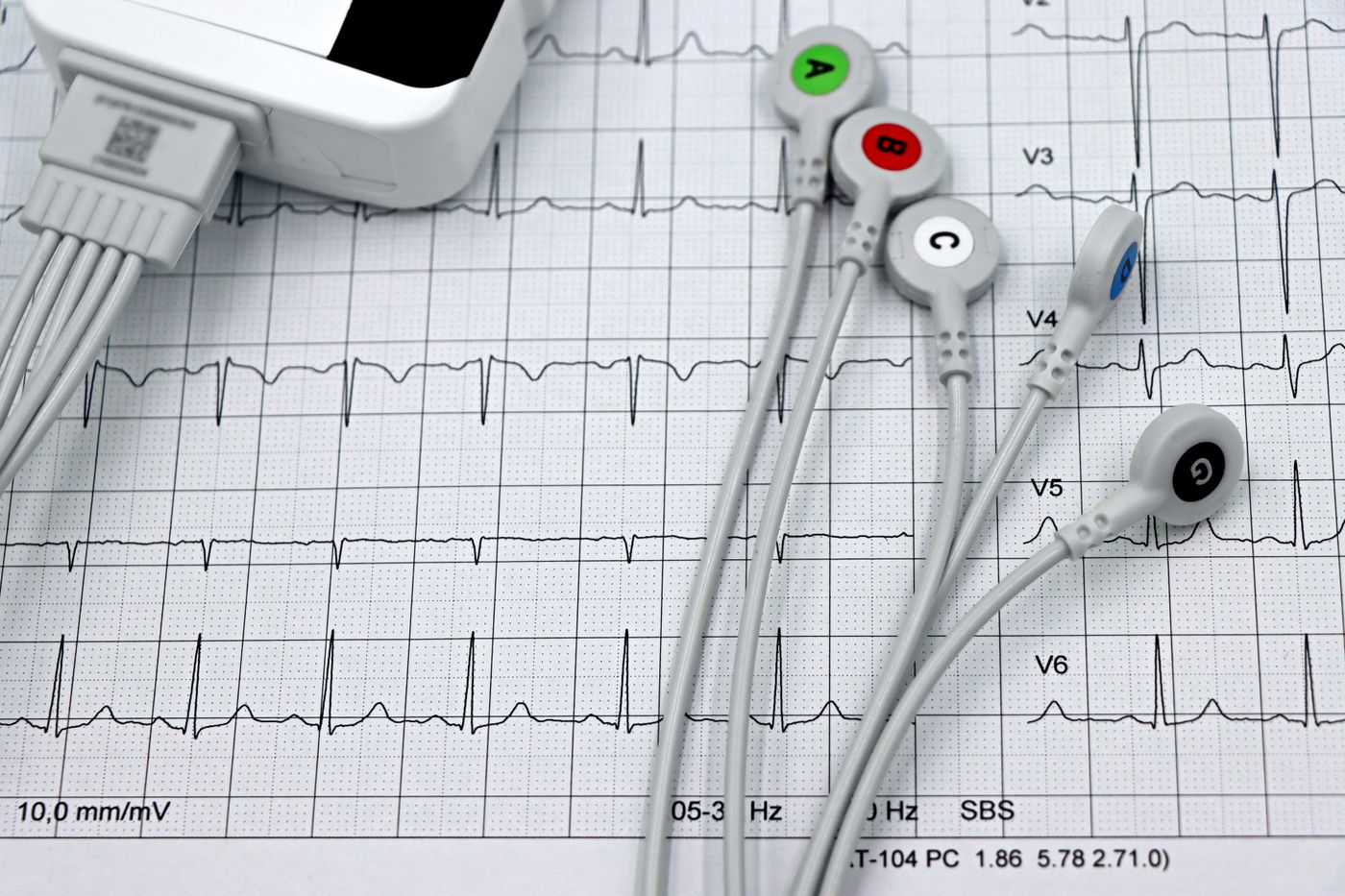
An EKG (electrocardiogram) technician records the heart's electrical activity by placing electrodes on a patient and running an EKG machine. Doctors use the tracing to spot rhythm problems, heart attacks and other heart conditions.
EKG certification is a national credential that proves you can do that job safely and accurately. The most common one is the Certified EKG Technician (CET) from the National Healthcareer Association (NHA). Other organizations, such as Cardiovascular Credentialing International (CCI), offer their own cardiac credentials.
There's a second way to show employers you're EKG-trained: the NHA's Certified Patient Care Technician/Assistant (CPCT/A). It includes an EKG section, along with patient care, phlebotomy and infection control. More on that below.
Do You Need EKG Certification in Connecticut?
Not by law. Connecticut doesn't license or register EKG technicians. In practice, though, most hospitals, cardiology offices and urgent care centers prefer or require a national certification, because it shows you've been trained and tested.
How to Get EKG Certified in 5 Steps
Here's how NHA certification works for the CET. The CPCT/A follows a similar process.
- Earn a high school diploma or GED. The NHA lets you apply if you’ll finish within 12 months.
- Complete EKG training within the last 5 years, or get 1 year of supervised EKG work experience in the last 3 years (or 2 years in the last 5).
- Perform at least 10 EKGs on live people. The NHA requires proof, so your training needs a hands-on component.
- Apply and schedule your exam. The CET is a 2-hour exam you can take at a school, at a PSI testing center or with live remote proctoring.
- Pass and keep it current. NHA certifications renew every 2 years with 10 continuing education credits.
Source: National Healthcareer Association, Certified EKG Technician eligibility and renewal requirements (checked September 2026).
Can You Get EKG Certified Online?
Partly. You can learn most of the theory online, and the NHA lets you take the exam with a live remote proctor. But you can't skip the hands-on part. The NHA requires proof that you performed at least 10 EKGs on live people, and that has to happen in person.
That's why the best EKG courses are hybrid: theory online, EKGs in a lab. At Northeast Medical Institute, for example, you learn for 2 days live on Zoom and then run 10 live 12-lead EKGs on a lab day. See how our hybrid EKG class works →
How Long Does It Take, and What Does It Cost?
Time: EKG training programs range from a few days to a few months, depending on the school and whether the course is stand-alone or part of a bigger program. After training, you schedule your exam, which takes 2 hours.
Cost: Expect to pay for training plus the certification exam fee. In Connecticut, Northeast Medical Institute's hybrid EKG course is $500 total ($250 tuition, $50 supplies, $200 registration). Check nhanow.com for current NHA exam fees.
EKG Certification (CET) vs. Patient Care Technician (CPCT/A)
Both are national NHA credentials. The difference is scope: the CET covers EKGs only, while the CPCT/A covers EKG plus the rest of a hospital tech's job.
Pay: ZipRecruiter (EKG technician, Connecticut, Sept 2026); Indeed (Patient Care Technician, Connecticut, 2026).
If you want the widest range of hospital jobs, the PCT route is hard to beat. You learn to run EKGs and care for patients and draw blood, and you earn one credential that covers all three. Read our full PCT certification guide →
EKG Technician Salary in Connecticut
EKG technicians in Connecticut average about $22.74 an hour, or $47,302 a year, according to ZipRecruiter (September 2026). The middle half of jobs pay roughly $36,100 to $52,300 a year.
For comparison, Connecticut phlebotomists earn a median of $22.03 an hour and nursing assistants $21.53 (BLS, May 2025). Patient Care Technicians, who combine all three skills, average about $23.34 an hour (Indeed, 2026).
The Fastest EKG Training Path in Connecticut
Our Hybrid EKG Technician course is the only 3-day EKG program in Connecticut:
- 2 days live on Zoom covering heart anatomy, conduction, rhythm strips, leads, heart rate and common rhythms
- 1 hands-on lab day where you run 10 live 12-lead EKGs
- Day (8 AM–5 PM) and evening (5–10 PM) options
- Labs in Middlebury, East Hartford and Woodbridge
- $500 total, with Klarna and school payment plans
Pair it with CNA and Phlebotomy, or take all three in our Hybrid Patient Care Technician program, and you're ready for the NHA CPCT/A exam. The Hybrid PCT program is on Connecticut's WIOA Eligible Training Provider List, so eligible students may train for free.
Start EKG training in Connecticut
Connecticut's only 3-day EKG program: 2 days on Zoom and 1 lab day. Students must be 18 or older.
Class calendar
Upcoming EKG Technician Classes That Prepare You for This Exam
Pick a start date and campus for the course that prepares you for this certification, then register online.
Don't see a date that works? New classes are added every month. Call (203) 391-6766 or view the full calendar for all campuses.
EKG Certification FAQs
Earn a high school diploma or GED, complete EKG training (or a year of supervised EKG work), perform at least 10 EKGs on live people, then apply for and pass a national exam such as the NHA Certified EKG Technician (CET).
Partly. You can learn the theory online and the NHA offers live remote proctoring for the exam, but you must show you performed at least 10 EKGs on live people, which has to be done in person.
EKG training programs range from a few days to a few months. Once you’re eligible, you schedule the 2-hour exam. In Connecticut, Northeast Medical Institute’s hybrid EKG course takes 3 days as part of the Patient Care Technician pathway.
Connecticut doesn’t license EKG technicians, but most employers prefer or require a national certification such as the CET or the Certified Patient Care Technician/Assistant (CPCT/A).
About $22.74 an hour, or $47,302 a year, according to ZipRecruiter (September 2026). Patient Care Technicians, who also run EKGs, average about $23.34 an hour (Indeed, 2026).
The CET covers EKGs only. The CPCT/A (Certified Patient Care Technician/Assistant) covers EKG plus patient care, phlebotomy, infection control and safety, so it qualifies you for a broader hospital role.