Best PCE Jobs for PA School and the Fastest Certifications
CNA, phlebotomist, patient care technician, EKG tech or pharmacy tech? See how PA and medical schools treat each job, how long training takes and which one fits your pathway.
Questions? Call (203) 391-6766, Monday–Friday, 8am–5pm.
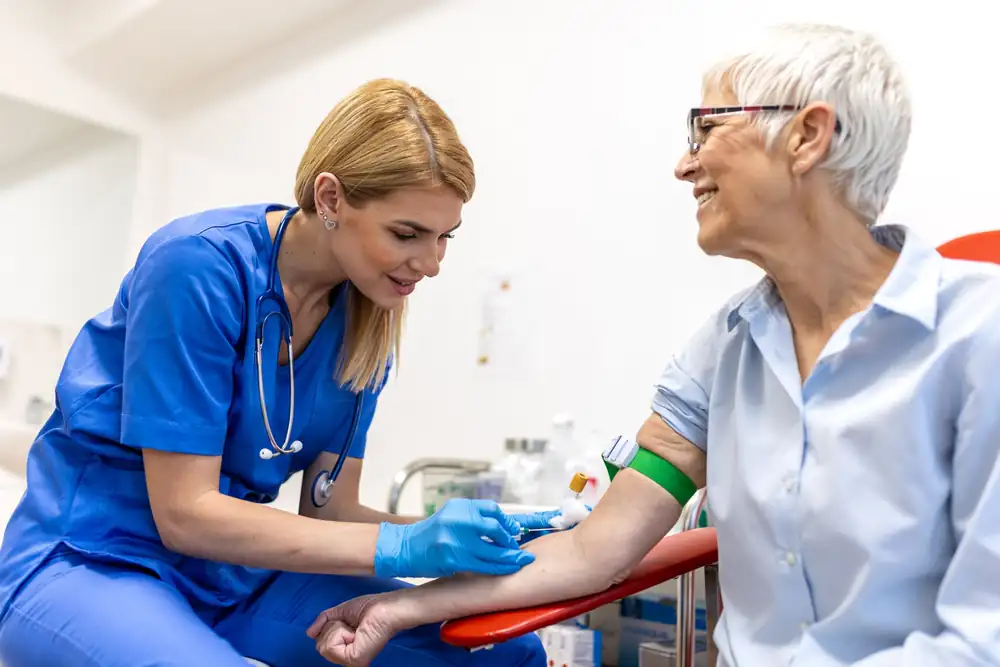
Earn patient care hours in as little as 2 weeks CNA and Phlebotomy are the fastest ways to start logging PCE hours for PA, medical or nursing school.
The Best PCE Jobs for PA School, Compared
The best PCE job gives you real responsibility, lots of patients and a schedule you can keep. Here’s how the most common options stack up.
| Job | Training time | PA school | Med school | Notes |
|---|---|---|---|---|
| PhlebotomistOffered at NMI | As little as 2 weeks at NMI | Usually PCE | Clinical | Fast, CASPA-named PCE; narrower range of patient care |
| CNA (nursing assistant)Offered at NMI | About 5 weeks at NMI (online + labs) | Usually PCE | Clinical | Most common NMI-trainable job among PA matriculants; broad hands-on care |
| Patient care technicianOffered at NMI | About 5 weeks (day) at NMI | Usually PCE | Clinical | 3 credentials; hospital, ER and dialysis jobs |
| EKG technicianOffered at NMI | 3 days at NMI (CNA + phlebotomy required) | Depends on program | Clinical | Best as part of PCT |
| Pharmacy technicianOffered at NMI | 4–6 weeks online + 3 evening labs at NMI | Usually HCE | Usually non-clinical | Ideal for pre-pharmacy; pair with a PCE job for PA |
| EMT | Often a semester-long course | Usually PCE | Clinical | Strong PCE; longer training, shift work |
| Medical assistant | Often several months to a year | Depends on program | Clinical (back office) | Depends on duties; CASPA lists MA under HCE |
| Medical scribe | On-the-job training | Usually HCE | Clinical-adjacent | Great exposure to decision making; HCE per CASPA |
Training times for jobs NMI doesn’t offer are general estimates. Verdicts follow CASPA’s definitions; each program decides for itself.
What Makes a PCE Job "Best"?
Hands-on responsibility
You touch patients and own tasks: vitals, blood draws, transfers, EKGs.
Patient variety
Hospitals and ERs expose you to more conditions than a single clinic.
Paid hours
Paid roles count everywhere. Sacred Heart requires them.
Fast to start
Every week in training is a week you’re not logging hours.
Fits your schedule
Per diem, weekend and evening shifts let you keep your GPA up.
Room to grow
Start as a CNA or phlebotomist, add EKG, move into a PCT or ER tech role.
Is CNA Good for PA School and Med School?
For PA school: Usually PCE CASPA names CNA as a patient care example, and 33% of students who started PA school in 2022 had worked as a nursing assistant. Every Connecticut PA program that lists accepted roles includes CNA.
For medical school: Yes. The AAMC lists working as a CNA as a way to gain clinical experience without shadowing, with 4–16 weeks of training.
For nursing school: The best preview of nursing you can get. You’ll practice the same fundamentals you’ll use in your first clinical rotation.
Hybrid CNA at NMI
- 104 hours · $1,662.95 · 6 CT campuses
- 48 hrs online (about 2 weeks), then 3 weeks of day labs or 4 weeks of evening labs
Is Phlebotomy Good for PA School and Med School?
For PA school: Usually PCE CASPA names phlebotomist as a patient care example, and Quinnipiac and Bridgeport list it as accepted. It was the prior job of 7.8% of 2022 PA matriculants.
For medical school: Yes, it counts as clinical experience because you work directly with patients. Some advisors see it as narrower than CNA or EMT, so it’s strongest with steady hours or paired with another role.
For nursing school: Helpful. Venipuncture skills and patient comfort carry over, though CNA is the more direct fit.
Phlebotomy Technician at NMI
- 80 hours · $1,645 · 2 weeks day / 4 weeks evening
- 56 hrs live on Zoom + 24 hrs of hands-on lab; NHA CPT exam on campus
Earn patient care hours in as little as 2 weeks CNA and Phlebotomy are the fastest ways to start logging PCE hours for PA, medical or nursing school.
Is Patient Care Technician Good PCE?
For PA school: Usually PCE Yes. PCTs combine CNA care with blood draws and EKGs, usually in hospitals. Sacred Heart and Bridgeport list patient care assistant roles, and Yale lists ER tech.
For medical school: Yes. Hospital-based clinical work with a wide range of patients is exactly what med schools want to see.
For nursing school: A strong fit. Many PCTs work on the same units where they’ll later train as nursing students.
Patient Care Technician at NMI
- 208 hours · 3 credentials · about 5 weeks day
- CNA + Phlebotomy + EKG in one pathway; about 5 weeks (day) or 10 weeks (evening)
Is EKG Technician Good PCE?
For PA school: Depends on program Not named by CASPA or any Connecticut PA program, so treat it as program-dependent. On its own it’s a narrow role; as part of the PCT credential it’s widely recognized.
For medical school: Running EKGs on patients counts as clinical experience. It’s most valuable as part of a PCT role.
For nursing school: Helpful for cardiac and telemetry units, but not a common requirement.
EKG Technician (PCT add-on) at NMI
- 24 hours · $500 · 3 days
- For students who already hold CNA + Phlebotomy; finishes the PCT pathway
Does Pharmacy Tech Count as Clinical Hours?
For PA school: Usually HCE Usually not as PCE. CASPA’s healthcare experience definition starts with “filling prescriptions.” Quinnipiac does list pharmacy technician, so check each program. 4% of 2022 PA matriculants had worked as pharmacy techs.
For medical school: Usually not counted as clinical hours, since you’re not caring for patients directly. It’s still meaningful healthcare experience.
For nursing school: Helpful for pharmacology, but not patient care.
Hybrid Pharmacy Technician at NMI
- 132 hours · $1,600 · PTCB-Recognized
- 120 hrs online (4 or 6 weeks) + 3 evening labs, 5–9 PM
Start the Job That Fits Your Pathway
Online theory, hands-on labs in Connecticut and the credential employers ask for.
Hybrid CNA
One of the two most common prior jobs of accepted PA students. Hands-on bathing, feeding, vitals and mobility with real patients.
48 hrs online (about 2 weeks), then 3 weeks of day labs or 4 weeks of evening labs
Phlebotomy Technician
The fastest route to a direct patient care job. CASPA names phlebotomist as a PCE example.
56 hrs live on Zoom + 24 hrs of hands-on lab; NHA CPT exam on campus
Patient Care Technician
Three credentials in one program. PCTs work in hospitals, ERs and dialysis, the settings PA schools rate highest.
CNA + Phlebotomy + EKG in one pathway; about 5 weeks (day) or 10 weeks (evening)
Hybrid Pharmacy Technician
Paid healthcare experience for pre-pharmacy and pre-med. Usually counts as HCE, not PCE, for PA school.
120 hrs online (4 or 6 weeks) + 3 evening labs, 5–9 PM
Earn patient care hours in as little as 2 weeks CNA and Phlebotomy are the fastest ways to start logging PCE hours for PA, medical or nursing school.
Free download
PCE & HCE Hour Log
Track every shift in one place and have your totals ready for CASPA, AMCAS or NursingCAS.
- Log date, type, role, organization, supervisor and hours for every shift
- Automatic totals for PCE, HCE, shadowing, volunteering and research
- Per-job start dates, end dates and total hours, ready to copy into your application
- Set your PCE hour goal and watch your progress
Excel / Google Sheets version + a printable PDF
Where should we send it?
By submitting, you agree Northeast Medical Institute may contact you by phone, email or text about this request. We’ll never sell your info.
Your hour log is ready
Download it below. Tip: open the spreadsheet in Excel or upload it to Google Drive to use it in Google Sheets.
Need PCE hours fast? Hybrid CNA · Phlebotomy · PCT
Next step
Earn patient care hours in as little as 2 weeks
CNA and Phlebotomy are the fastest ways to start logging PCE hours for PA, medical or nursing school.
Start with CNA
Start with Phlebotomy
Call (203) 391-6766
You’ll be in good company: students from 230+ colleges
Classmates from UConn, Quinnipiac, Sacred Heart, Yale and schools across the country use NMI to get certified around their class schedule, then work as CNAs, phlebotomists and PCTs to build the patient care experience PA, medical and nursing programs look for.
- 45%of our students are in college or have graduated
- 600+on Pre-Med, Pre-PA & Nursing tracks
- 230+colleges & universities represented
- CT State Community College
- University of Connecticut
- Southern Connecticut State University
- Quinnipiac University
- Goodwin University
- Central Connecticut State University
- Sacred Heart University
- University of New Haven
- University of Saint Joseph
- Albertus Magnus College
- Yale University
- University of Hartford
- Trinity College
- Western Connecticut State University
- Eastern Connecticut State University
- Fairfield University
- Wesleyan University
- Post University
- University of Bridgeport
- Connecticut College
- Harvard University
- Cornell University
- Georgetown University
- Johns Hopkins University
- Brown University
- Northeastern University
- Boston College
- Boston University
- Tufts University
- University of Pennsylvania
- University of Virginia
- Penn State University
- Syracuse University
- UMass Amherst
- University of Rhode Island
- Providence College
- Fordham University
- New York University
- Case Western Reserve University
- Villanova University
- Wake Forest University
- UCLA
- University of Michigan
- Rice University
Schools shown are those our students reported attending or graduating from on enrollment forms (2024–2026). Listing does not imply affiliation with or endorsement by these institutions.
Best PCE Jobs FAQs
Which job should you get for PA or medical school?
Best jobs
What are the best PCE jobs for PA school?
Jobs with hands-on responsibility and lots of patients: CNA, patient care technician or ER tech, EMT, phlebotomist and clinical medical assistant. Nursing assistant and medical assistant were the two most common prior jobs of 2022 PA matriculants.
What is the fastest PCE certification to get?
Phlebotomy. Our day program can have you certified in as little as 2 weeks. CNA takes about 5 weeks with the online portion and labs.
What are the best jobs for pre-med students?
Any job with regular patient contact: CNA, patient care technician, phlebotomist, EMT or medical scribe. Choose something you can stick with, because med schools value long-term commitment.
What are good pre-PA jobs I can do in college?
Per diem or part-time CNA and phlebotomy jobs are the easiest to fit around classes. Many students train over winter break or summer and work weekends during the semester.
CNA
Is CNA good for PA school?
Yes. CASPA names CNA as patient care experience, and it’s accepted by every Connecticut PA program that lists roles.
Is CNA good for med school?
Yes. The AAMC lists working as a CNA as a way to gain clinical experience.
CNA or phlebotomy for pre-PA?
CNA gives broader hands-on care; phlebotomy is faster to earn. Many students do both, and adding EKG makes you a patient care technician.
Phlebotomy
Is phlebotomy good for PA school?
Yes. CASPA names phlebotomist as patient care experience, and Quinnipiac and Bridgeport list it.
Is phlebotomy good for med school?
Yes, it counts as clinical experience. Steady hours over time make it stronger.
Does phlebotomy count as clinical hours?
Yes. You’re working directly with patients, so it counts as clinical experience for medical school and as PCE on CASPA.
Other jobs
Does pharmacy tech count as clinical hours?
Usually not. It’s healthcare experience because you fill prescriptions rather than care for patients directly.
Is scribing clinical experience?
It’s usually counted as clinical exposure for medical school and as HCE (not PCE) for PA school.
Does EMT count as clinical hours?
Yes. EMTs are named in CASPA’s patient care definition, and it counts as clinical experience for medical school.
Is a patient care technician good PCE?
Yes. PCTs provide hands-on care in hospitals, and patient care assistant and ER tech roles are listed by several CT PA programs.
Keep Planning Your Application
Every guide in our Pre-Health Pathways series, written for Connecticut college students.
Pick Your PCE Job and Start Training
Get certified in weeks and start logging hours PA and medical schools recognize.
Monday–Friday, 8am–5pm
Sources
Requirements change every admissions cycle. We checked these sources in September 2026. Always confirm with each school.
- CASPA Applicant Help Center, Experiences (PCE and HCE definitions): help.liaisonedu.com/CASPA_Applicant_Help_Center/Filling_Out_Your_CASPA_Application/CASPA_Supporting_Information/2_Experiences
- PAEA Student Report 6 (2022 matriculants): e1.nmcdn.io/assets/paea/wp-content/uploads/2025/01/FINAL_student-report-6-2025-01-13.pdf
- AAMC, Five Ways to Gain Experience Without Shadowing: students-residents.aamc.org/aspiring-docs-fact-sheets-get-experience/five-ways-gain-experience-without-shadowing
- Quinnipiac University MHS Physician Assistant admissions: grad.qu.edu/programs/masters-degree/physician-assistant/admissions/
- Sacred Heart University MSPAS admission requirements: www.sacredheart.edu/majors–programs/physician-associate-studies—mspas/admission-requirements/
- University of Bridgeport PA Institute, direct patient care experience: www.bridgeport.edu/academics/programs/physician-assistant-ms/direct-patient-care-experience
- Yale Physician Associate Program, prerequisites and experience: medicine.yale.edu/pa/admissions/prerequisites-experience-skill/
Call
Register Now